

“Florida Attorney General James Uthmeier is attempting to strip legal parentage from families who conceive children using a genetic donor,” says Mark Joseph Stern, a news reporter for Slate. In May of 2026, several news outlets quietly expressed their shock at the Florida Attorney General’s “crusade”, which aims to take legal parentage away from parents who conceive children using a genetic donor. It is an attack on a specific same-sex couple from France, but has negative implications for thousands of families, including parents who adopted and heterosexual couples who used a genetic donor to be able to conceive.
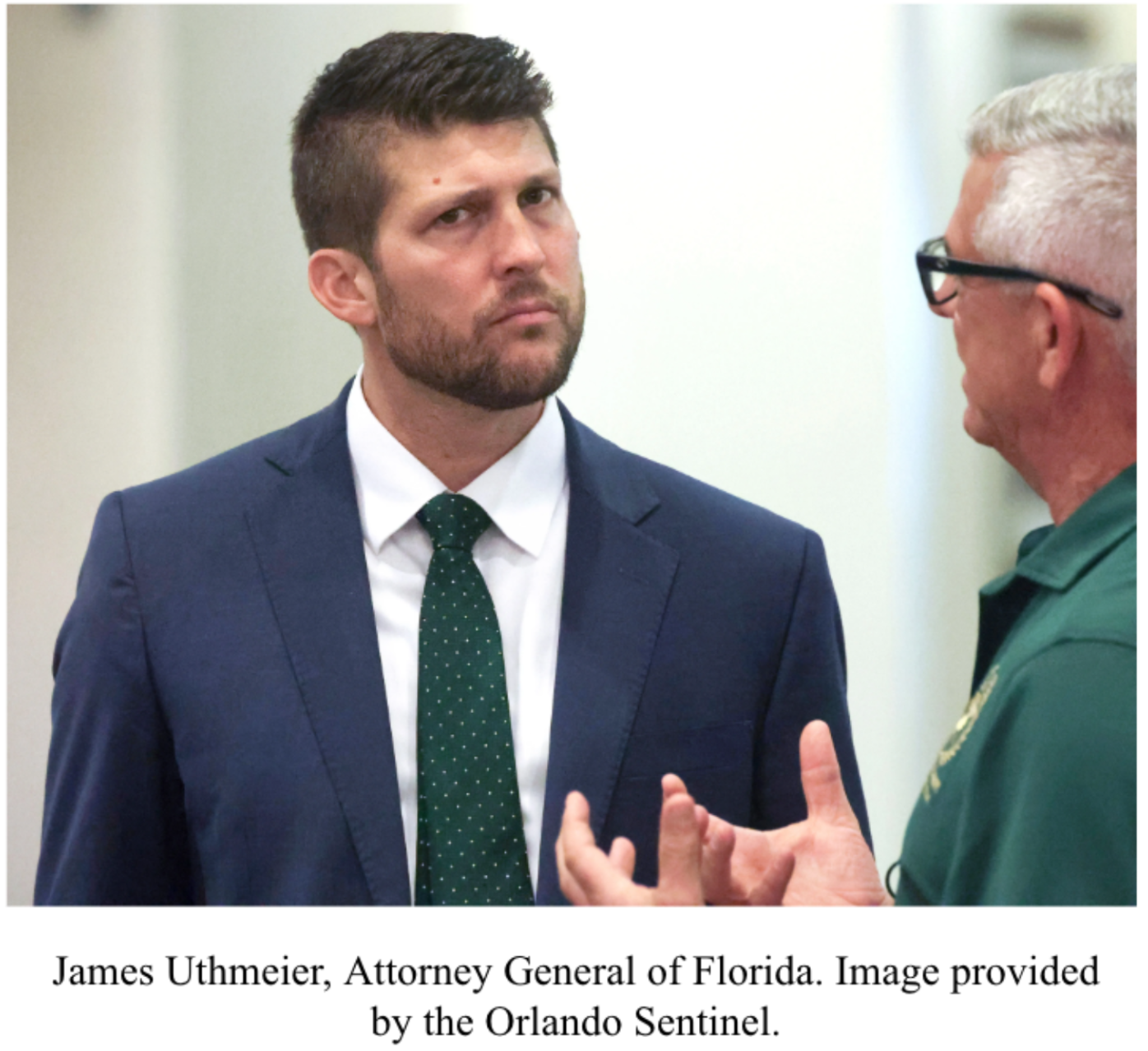
Uthmeier (right), a Republican appointed by Governor Ron DeSantis, argues that Florida’s surrogacy contract language goes against the 13th Amendment – specifically the clause regarding prohibition on slavery – as well as the state’s constitution, which bars biological parents from transferring their parental rights at all. These assertions, if put into practice, would end donor conception and surrogacy in Florida. They would make some parents legally strangers to the children they are currently raising, and for the kids it would mean that to the law, they have no recognized parents. Uthmeier claims he would do all of this to protect the children from “modern day slavery” according to him.
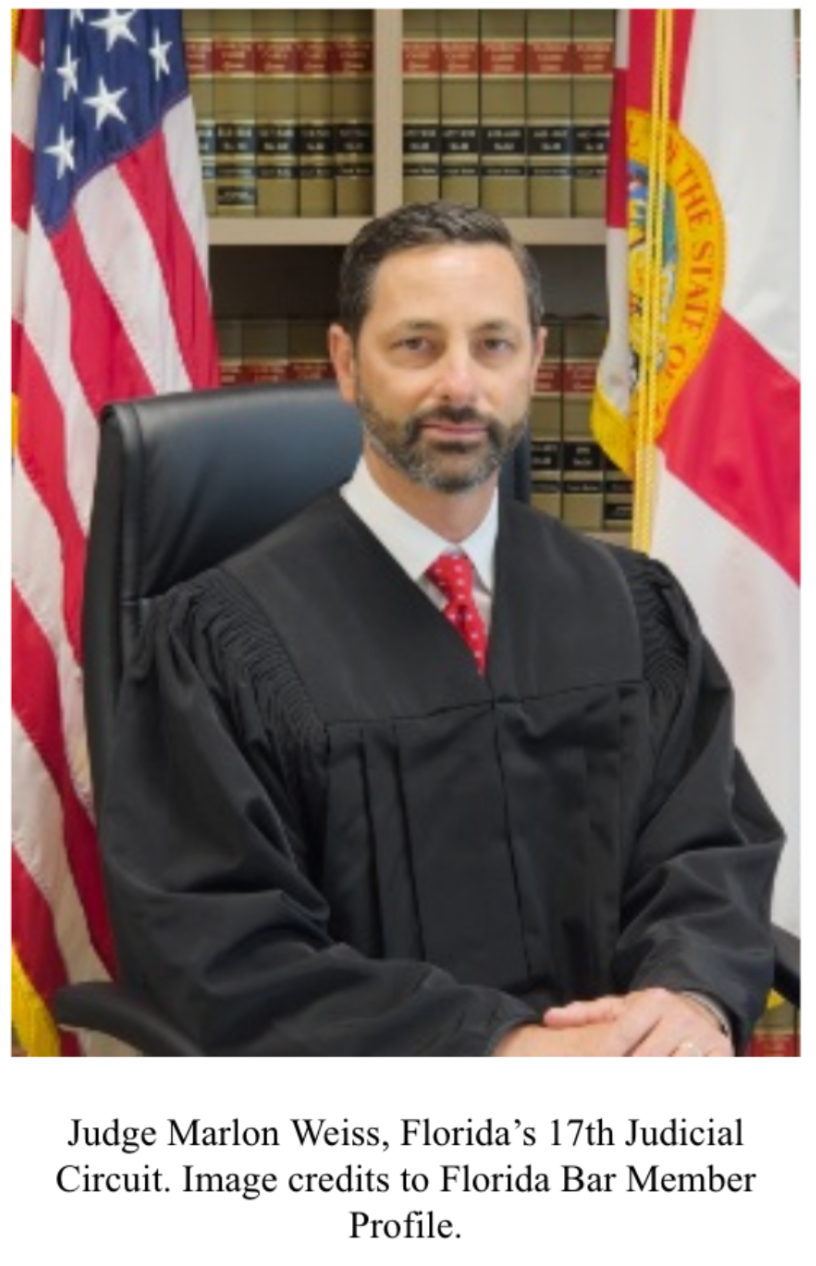
The aforementioned French husbands were the beginning of this event, when they asked Judge Marlon Weiss (also a DeSantis appointee) to sign their pre-birth order that would acknowledge the two as the lawful parents of their child who would be born through surrogacy. That entire process has been lawful since 1993 in the state of Florida, and most couples have no trouble with it. This time, though, the order was “begrudgingly” signed by Judge Weiss (left), but with it he issued an opinion. It speculated that the surrogacy contract was unconstitutional, and thus, void. “Establishing parentage through a contract, he wrote, may violate the rights of ‘unborn children’—who, he mused, might be entitled to legal personhood.” To reporter Stern, Weiss clearly wrote this opinion to “...get DeSantis’ attention for a promotion” – a promotion he did not end up receiving. Yet Uthmeier used the opportunity that the opinion created to launch a battle against Florida’s laws that recognize rights of non-biological parents.
24 hours after the French couple’s baby was born, the attorney general filed a motion to step in on the case, wanting to invalidate the surrogacy contract as unconstitutional, as well as deny the couple’s legal parentage over the child.
Uthmeier had two arguments. 1) that the surrogacy contract violated the 13th amendment since the contract “treats children as property” and 2) that biological parents cannot transfer their parental rights to another party. The second point, according to him, is supported by Article 1 Section 2 of the Florida Constitution. However, in actuality, the specified Article states this: “All natural persons, female and male alike, are equal before the law and have inalienable rights, among which are the right to enjoy and defend life and liberty, to pursue happiness, to be rewarded for industry, and to acquire, possess and protect property. No person shall be deprived of any right because of race, religion, national origin, or physical disability.”
There are many parts of Uthmeier’s assertions that are at minimum problematic and at maximum downright horrifying. Most prominently in many eyes is the insult to “gestational carriers, genetic donors, and intended parents to suggest that the mutual creation of a child is somehow akin to the bondage of chattel slavery”. First, gestational carriers are not paid for surrendering the child (who is unrelated to them genetically) to the intended parents, but only for the time they spent carrying the child and the expenses that come with that process. Drawing a parallel between that and the horrors experienced by enslaved women and their children – who were ripped forcibly from their biological mothers and sold as a good into a life of harsh and uncompensated labor – is deeply offensive to more than one group.
It’s not just the moral and ethical standpoint that comes into contention though. Legally, like all other states, Florida law has recognized the rights of non-biological parentage for a long time. This general principle was even recently reaffirmed with a unanimous vote eight years ago by the Florida Supreme Court. The law additionally permits non biological parents through contracts and consent therein when they conceive using donated genetic material. Uthmeier’s argument would render both of these unconstitutional.
Putting aside the unconstitutionality ramifications of the conception of children using donated genetic material, the attorney general’s theory would additionally make Florida’s adoption laws invalid. This would create chaos and disaster, because if biological parents cannot surrender their parental rights to a child through the law, it would put the legal claim to the child into challenge. And if no one is able to adopt but the biological parents of the child, it could have disastrous implications for Floridian children all over.
The standpoint Uthmeier takes on this issue doesn’t just apply to the French couple. It’s a concerning – and somewhat contradictory – scope. Primarily, it isn’t just same-sex couples that utilize surrogacy. Heterosexual couples do, single men do, and single women do. “Every configuration there is, people use surrogacy,” says the attorney representing the couple who was targeted. As for contradiction, the legal arguments drawn by the attorney general bring no distinction between opposite-sex couples and same-sex couples, yet his “public commentary” revolves around same-sex parenting in surrogacy. It’s become a battle over who gets to be a parent in the state of Florida.
The case is likely to go to the Florida Supreme court, where the majority of judges are DeSantis appointees. As for Uthmeier, as far as anyone can tell, he plans to take this issue to the top of the courts. This would be a massive blow in the fight for reproductive freedom in the state, and has consequences for thousands of families.