

In October of 2025, a UN Special Rapporteur on the violence against women, Reem Alsalem reported to the United Nations General Assembly. Her report pointed out psychological, economic, and physical violence that surrogate mothers can experience, and said that the practice of surrogacy results in “severe human rights violations” that included their rights to health, family, privacy, and physical safety. She even examined so far as to assert that surrogacy increases risks of torture, inhumane and degrading treatment, and enslavement.
According to her, new “emerging” evidence reveals the risks for children born through a surrogacy arrangement. Children can have negative mental and physical health developments that result in being separated at birth from their surrogate mother. Identity struggles, trafficking, abandonment, and increased risk of statelessness were also mentioned. Asalem also touched on “the arbitrary and forceful termination of their lives in utero at the discretion of the commissioning parents”. She names State and non-State actors as “complicit” in enabling this practice. She demands a global abolitionist framework, and calls for the end of demand for surrogacy through the practice of penalizing the commissioning of children through surrogacy.
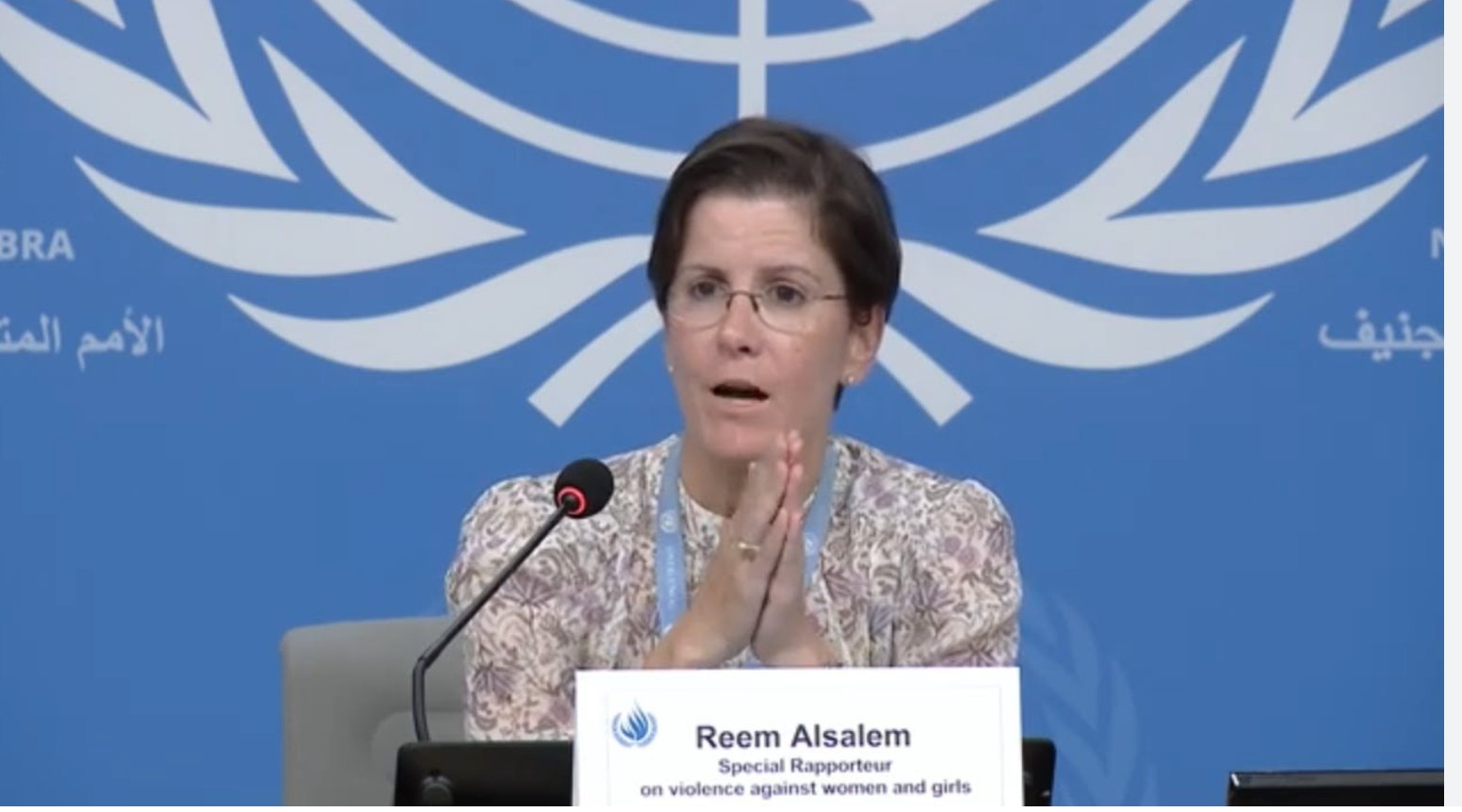
Additionally, Alsalem wants decriminalization of surrogate mothers, recognition that they are victims, and to provide them with protection, access to justice and reparations, assistance, and to end their “economic dependence on involvement in surrogacy arrangements”. She says this would have to happen through raising public awareness, education campaigns regarding the harmful consequences of surrogacy, and more. It is Alsalem’s recommendation that the birth mother should be recognized as the legal mother, and any transfer of parental rights should only be completed through judicial adoption processes that would have to be in the child’s best interests. Further recommendations of hers include guaranteeing equal rights and access to services for children born through surrogacy arrangements, making international cooperation stronger for assistive and protective strategies of victims, and improving data collection.
These calls for new legislation and recommendations come from the “Alsalem Report”, which essentially proposes the adoption of legally binding international regulations prohibiting all forms of surrogacy. “It suggests applying a regulatory model inspired by the Scandinavian approach to prostitution: criminalizing promoters and clients, clinics, agencies, and intermediaries, and decriminalizing women who have been surrogate mothers.” says Political Network For Values (PNFV). The Alsalem Report gathered 120 statements from supporters and opponents of surrogacy to make its assertions, as well as 78 opinions collected online. Surrogacy does fuel a multi-million dollar market, and most of the money remains in possession of operators and intermediaries. Just a fraction of it actually ends up in the hands of the surrogate mothers – who often come from impoverished regions and are the ones who need it the most.
Tightening regulations is likely not the wrong option, especially in places outside the United States. The question at hand is how to do it, and to what extent. Alsalem actually heard the experiences of women who have been surrogate mothers, as well as authorities, organizations, and companies involved in the process. “She found there are records of how women and children are identified by codes and classified as ‘high quality’ or ‘low quality’ products based on their characteristics” says PNFV. Furthermore, although it is illegal and protected through contracts in the U.S., there have been reports that Alsalem uncovered of children being “discarded” upon delivery when their characteristics (such as sex) or potential disability do not meet the expectations of the intended parents.